Tampilkan postingan dengan label Risya Tazkia Nafisah. Tampilkan semua postingan

Kamis, 17 Januari 2013

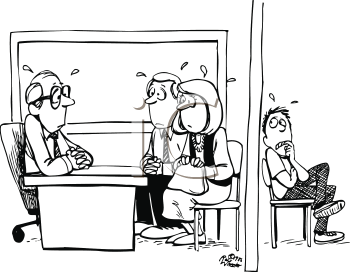
Teacher-Parent Communication

http://www.clipartpal.com/_thumbs/034/1/Confrnc_tnb.png
When I was in senior high school, my parent and my teacher rarely meet or communicate. If I am not mistaken, my parent just came at the first day I registered and never came there again. Well, actually my parent is a teacher in my senior high school. So, what I meet by communicating or meeting above is a meeting to discuss about me myself as a student.
There was a paradigm about teacher-parent meeting in my school. Only those students who have academic problem or misbehavior in school who’s the parents should come to school and meet the counselor or other teacher. In fact, I often break some simple rule but with little consequences so that my parent should not come to school to deal with my problems in school.
When I learnt many things in SSE, I realized that parent-teacher communication is really important for students’ sake. Students’ time is mostly spent in school and teacher is the second parent of students, so their parent still should be included in their learning process. Students’ learning process should be a responsibility for both of teacher and parents.
In my opinion, there are at least three core times when teacher and parent should meet each other to discuss about the student. First, before the learning process begins, teacher meets parents to tell them about how the learning process will be, what students are expected to do and have, and what they can do collaboratively for help students in learning. Second, during the learning process, teacher needs to meet parent in order to discuss students’ progress, students’ problem in learning, what they can do to prevent students’ problem, and reflecting to what teacher and parents have done for students so that it can be improved. The last, at the end of learning process teacher meets teacher to evaluate and appreciate teachers, parents, and students’ work.


Kamis, 10 Januari 2013

An Ex-Problematic Student Say


In school, there is usually a problematic student(s) who becomes a big threat for both of people in that school and school image. Since my mother is a students’ counselor in two private schools in Garut, so I often heard many cases of problematic students that she deal with. Moreover, I also experienced some of similar problems either as a victim or as a problematic student (doer).
There are some serious problematic issues that students may do which are rule defiance, aggression, bullying, and violence. Every issue is indicated by certain students’ behavior and caused by many reasons either from student’s self or student’s surroundings. Problematic issues may be caused by lack of students’ motivation and cause students’ motivation decreasing.
My senior high school had a lot of defiant students, including me, who defied school’s rules either openly or stealthily from a simplest defiance until a threatening one. My defiance were like sleeping in class while teacher was explaining, skipping the class, humiliating teacher, and not wearing a properly uniform according to the school regulation.
http://www.thirteen.org/metrofocus/files/2011/09/pushed_lg.jpg

First, my reason for sleeping or skipping the class was simply because the lesson was not interesting and the daily task and examination that teachers gave used to be easy. Second, I had humiliated my Bahasa Indonesia teacher once by giving him my drawing of him and his bored class. I also said to him in front of class that the way he taught me was not worthwhile because I did not get anything I needed in his class. I knew it was not acceptable to do that, but I was so guilt wasting my time many times in his class. Third defiance, in my school female students should use tweezers in their jilbab, but I did not use it. I thought regulation of using tweezers was a non sense and defying it would not affect my achievement and learning process and that school. I asked the teachers why we should use it, and their answer was just because it was the symbol of our uniform which could make our uniform different from other Pesantren’s uniform in Garut. I thought it was not really important, so I defied this rule from I entered the school until I graduated.
Since my school was private Islamic school (Pesantren), it had more rules than other schools. However, it had not run a strict rule monitoring to students so that was why many students defied the rules. School’s side used to take action against defiant students when the problem they made had been serious. Thus, it was unfortunate that the school rarely prevented the serious problem.
http://www.friendlyoakspublications.com/Docspeak/
wp-content/uploads/2010/06/kylrusty2.jpg

Besides defying the rule, I also often did indirect bullying with my gang to opposite gang. If I am not mistaken, we were taught by Islam principle that talking about other people’s bad side behind them is like eating corpse. Their sins also will be the talkers’ sins. Thus, it is totally unacceptable. However, I did not know why we still did it.
When I was in elementary school, I was not as brave as I was senior high school student who defied rules and often did indirect bullying towards other students. I had been a bullied student in elementary school. My seatmate often extorted my money and intimidated me by ruining my book if I did not give her money. I did not have enough bravery to cry or report her to my teacher or my parent or move to another seat, so it still happened in a year until I was moved to another class.
My teacher, later, said to me that at that time my voice was so low and I could not express myself. I became introvert and could not find another friend. My classmates later said that I often expelled myself from other students in class and outside the class. Even, until now I do not remember anything happened in that year except that bullying moment.
Bullying may come not only from students but also from the teacher. I had a teacher who often bullied her students verbally like humiliating or verbally abusing. She made me afraid of going to school, getting bad score, and even afraid of facing her outside the class. For instance, when I saw her in a market, I preferred to hide rather than greet her. Shockingly, my siblings who were her students and my classmates felt the same like me.
As I have mentioned before that there are many problematic cases I had ever had, I even could not write it all here. Thus, the lesson I get is if I, as a teacher, need to deal with those kinds of problematic students and issues, I will try to understand their position and possible reason why they do it since I have been like them. I had a reason why I became a defiant student, so do my students.
As a defiant student, I knew my consequences of my attitude so probably do my students. Thus, telling them about consequences of defiance is not enough. It is important to teach my students about responsibility and critical mind. When they are critical minded and responsible, they will not think about themselves only, like what I did before, but also think about the impact of defying rule to other people and their environment.

Kamis, 06 Desember 2012

Interested at the First Sight


According to my experiences in teaching practice, I found that students’ condition in every school and class was different. Even students’ condition in a class could change from time to time. For instance, accelerated students who I taught (I call them my students in this article, even though they were not exactly my own students) in previous school experience followed my instruction and done all activities well in the first meeting, but it did not happen the same way as in the second meeting. At the first meeting, most of them were passive but at the next meeting they were talkative. It could be because of the activities conducted in the first and the second meeting were different or students’ mood, or the topic, or other possible reasons.

Somehow, it was a challenge for teachers to adjust the learning activities with any condition. In other way, teachers need to increase students’ interest in learning activities so that they could effectively and meaningfully engage in learning activities. There are four instructional variables that could be consider as the factors for developing students’ interest i.e. introductory focus, personalization, involvement, feedback.

Introductory focus means at the beginning of the lesson teachers attract students’ background and build conceptual framework for the lesson which is based on students’ experiences or past learning. It could be through giving question, providing concrete example and telling the objective which will lead students to the material. Since it is began with the problem into the material, the lesson sequences become inductive.

My students were more interested when I linked the new material with their experiences rather than with their previous learning. When I asked about something that related with their life, they were indirectly and subconsciously go into the learning. Inverse, when I talked about material that they have learnt, most of them just kept silent. They might feel that they should be serious and immediately memorize what they have learnt. Perhaps, I did not use the right technique to link it into their previous learning.

Moreover, according my students’ feedback, interesting appearance of teaching aid I presented has attracted their attention. I used Prezi for presenting the learning objective and agenda and also the material that I want to give. I think, teaching aids also should be considered in developing interesting learning activities.

Besides that, my pitch and my gesture when I opened the class also influence the next learning activities whether they pay attention to me, respect me, and follow the activities. My pitch in accelerated class was not a problem since it is small class with eight students in there. However, in another class the students were above 35 and my low pitch was troublesome. Most of them gave me feedback to speak louder and some of them asked me to be more enthusiastic.

Well, what teachers do at the very beginning of the lesson is very important for the whole lesson that day. It will affect students’ interest, attention, and respect to the teacher, focus, and understanding of the framework and so on. When the students are interested at the very beginning of the lesson, then teachers will easily maintain it for the remaining time rather than if they are not interested at all from the beginning.


Jumat, 09 November 2012

My Classroom Climate


There are four factors should be considered in creating positive classroom atmosphere or climate i.e. order and safety, success, challenge and task comprehension.
Every class may have its own rule. It could be created based on the culture surrounding the class, students and teacher agreement, or other ways. The rule that is internalized in a class will become an order which keeps the class run in the right place and safely. There is also an order in SMA Labschool Kebayoran where I taught in order to fulfill my school experience program (SEP).
The simplest order that I could see at the first day I came there was the way students and teachers do greeting. They have a unique form of “salam” that made teachers and students became like a friend. Therefore, I did it when I meet them in class. Other orders were regulation of using gadget and time limitation if they want to go to toilet. Students are prohibited in using their gadget during classroom activity. They are also prohibited to go to toilet more than ten minutes. Moreover, if they are late to come to the class more than 15 minutes, they will be considered as abstain.
In short, I did not need to put more effort in creating order because the school has created good orders for its members. Thus, I just needed to keep the order internalized and did not break it. However, that was the big challenge for me since I was a newbie among them. It was hard to make them respected me like they respected their real teacher. My master teacher said that some of them disobeyed the rule because they did not see me as the part of this school.
Besides that, as a teacher I needed to design the lesson so that students’ opportunity to success is balance. Teachers should bear in students’ mind that they have opportunity to success in that class.
I explained the learning objective to them and give equal task for each of my students in order to give the same opportunity for them. Moreover, when a student did not answer my question correctly, I gave him more time to think about his answer again so that he could correct his own answer. However, in bigger class it was hard to control it. There were some students who seemed not care about their success in my class since I just taught them twice and it would not affect their score in English.
I did not really give the suitable challenge to my students because I did not sure their level before I taught them. My master teacher did not want to give me a clue in which level they were in. Thus, in the first teaching session I gave them too easy task since their English were very good.
For task comprehension, I thought I did it well once when I taught movie review and mind map. First, in the beginning of the class I built the students’ schema of a topic that was going to be discussed. It make the listening activities I would give them later became comprehensible. Then, I used PBL method to model a mind map so that it will be authentic and comprehensive. I also did join construction activity when my students and I were making a mind map together before they make it independently.
From SEP this semester, I became more realize that being a teacher is not easy. As we may know that teachers’ responsibility is very big.

Selasa, 09 Oktober 2012

Because of you, my needs


According to humanistic theory point of view, every individual surely has motivation or encouragement to fulfill their needs. Maslow states on his theory “hierarchy of needs” that as human being there are some categories of needs that are basically needed by every individual. There are survival need, safety need, belonging need, and self-esteem need which are categorized on deficiency need and self actualization which is growth need.

I agree with him that individual will try to fulfill their deficiency needs and also growth needs either consciously or subconsciously. I mean subconscious is when individual does not really realize and put more effort on his/her needs because they already have it. For instance, before I entered college and moved from my hometown, I did not aware and struggle to fulfill my survival need, safety need, and belonging need because my parents and my friends has completed it. I had a place to stay and go back to, a freedom to do what I want as long as it does not break the rule, and at least I have a family and friends around me who love and accept me as who I am.

However, when I went to Jakarta to continue my study, my first impression was I have to fulfill my needs alone and put a lot of effort for it. I realized that I needed to find a boarding house to stay. I needed to be careful with what I want to say and what I bring because I had not trusted anyone here and also because news showed how high the level of criminality in Jakarta. Moreover at first moment, I had no friend so that I feel so lonely and unrecognized by others. Then, I behaved well and did my best to what I should do so others can recognize me. By these conditions I consciously ran hard to fulfill my needs, so it meant the conditions made me motivated to be able to survive and be accepted.

There is contemporary idea about individual need which comes after Maslow’s theory. It is the need for self-determination that encourages individual to make a decision in order to control an environment. From this idea, an assumption about three innate psychological needs, i.e. the need for competence, the need for autonomy, and the need for relatedness, is drawn.


I also experienced those needs when I was in senior high school. At that time I was motivated to capable in all subjects. Even though there are 27 subjects and most of them are delivered using Arabic language in written and Bahasa in spoken. I think I have many reasons why I was so motivated. First, I regret that I cannot enter the best school in my hometown because my parents do not trust me that I can scrape along and be responsible. Thus, I wanted to show my best and how responsible I am to my teachers, friends and my parents so that they will not be able to see my weaknesses in academic and they will not underestimate me anymore. That is my need of competence. The second reason, I want to rely on myself whenever my teachers gave me a command or problem in learning. It might be also because I did not really trust my friends in terms of the content taught by the teachers, so I avoided asking them. It might be my need of autonomy. The other reason, I thought that if I was capable in all subjects, my friends can rely on me if they need me and I can help them in learning if they ask me. In my opinion, it can be said as my need of relatedness.

Kamis, 04 Oktober 2012

Summary and Reflection: Motivation and Managing Students for Effective Learning


In the first meeting of motivation and managing students for effective learning (MMSEL) class, my friend and I learned about definition of motivation, two types of motivation viewed from where motivation comes, and theoretical views of motivation.


From our discussion and from what my lecturer’s explanation, I conclude that motivation is psychological factor which encourage and direct individual to do or achieve something. It should be created and maintained either by the individual itself, by others, or both. Therefore, motivation can be viewed as a sustained process created to encourage individual to do what intended to do.

Motivation can come internally from the individual itself or be forced by external factor which is outside the individual. Thus, motivation, according to where it comes, can be divided into two types which are intrinsic and extrinsic motivation. Intrinsic motivation can be created because of individual’s passion, curiosity, self-determination, interest, desire, dream, and so forth. Besides that, extrinsic motivation can be forced by challenge, social or economical factor, rewards, friendship, and so forth. So does in teaching and learning process, for instance, students who has interest in certain subject will intrinsically motivated to learn the subject and involve in learning and teaching activities given by the teacher. Other example, students who like being given a reward by the teacher when they do the best will extrinsically motivated to learn. They learn and perform as the best as they can because they want to get the reward.

However, I am confused whether responsibility given is extrinsic motivation and whether feeling is intrinsic motivation. Responsibility is given by other, it seems like extrinsic motivation, but if the individual itself is not responsible (intrinsic factor) she/he probably will be not motivated. Then, when individual do something because she/he is happy, is it intrinsic motivation? As we may know, feeling is intrinsic factor which affected by external factor.

There are some theories which view motivation from different perspective. First, behaviorist theory views motivation from behavior changes as a product of individual experiences in his/her environment. Individuals receive external stimuli such as rewards, punishment, etc. that make them change their behavior. It is different with social cognitive and humanistic theories that focus on intrinsic motivation. Social cognitive theory emphasizes more on intrinsic motivation like individuals’ assumption, belief and thought that make them intend and attempt to do or achieve something. Whereas, humanistic theory views individual as human being who want to grow and accomplish their personal needs. It is like what Maslow described on his theory “hierarchy of needs”. The last perspective is from socio-cultural theory. It views motivation as a need to involve in community so that every individual can support each other to maintain and accomplish their goals.

For me, as the next generation of teacher, knowing deeply about motivation is a must. As what I have write above that motivation is psychological factor. It means it is an abstract thing that we can see only from its symptoms. Teachers should be able to recognize its symptoms well so that they can convince when their students are motivated or unmotivated. Moreover teachers also need to know various ways to motivate their students and how they can design teaching and learning activity that can motivate them.